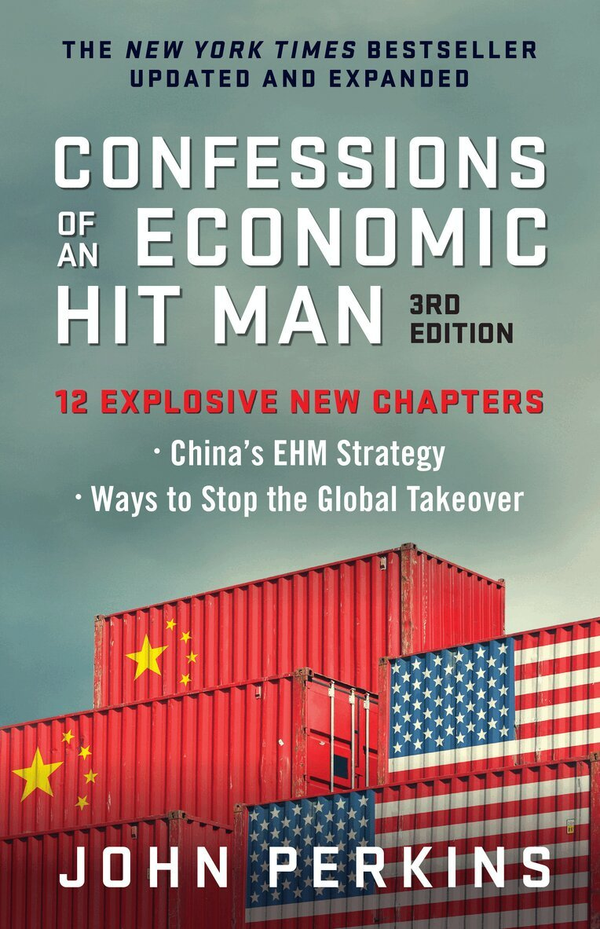
From hand-drawn to polygons: A toy story
In 1995, polygons changed animated storytelling. In 2026, it’s prompts. The tools have changed, but the rules of storytelling haven’t.
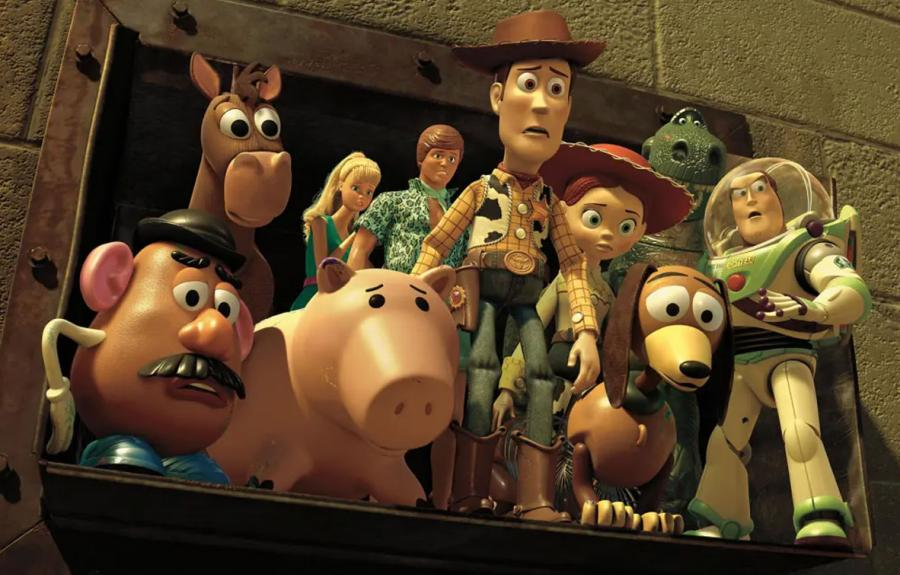
As I said previous episode, I watched another episode from Charlie Rose website. This time, we had 2 guests: Steve Jobs and John Lasseter, to talk about Pixar Studios and Toy Story.1
Quick Introduction To Pixar
Pixar started as the Graphics Group inside Lucasfilm (yes, that Lucasfilm, the Star Wars people). George Lucas, who was clearly already busy with one revolution, sold it in 1986 to Steve Jobs for $5 million. Jobs then invested another $5 million into the company, eventually putting in over $50 million of his own money before seeing a single dollar back. Not a small bet.2
To read more about the Lucasfilm era, I highly suggest to read this article.
At the time, Pixar was mostly a hardware and software company. They were building rendering machines and selling them to film studios and the government. The film making side came later, almost by accident, almost by brainwashing. More on that in a second.
In reality, the early shorts were just high-end commercials for their hardware. They weren’t trying to win Oscars; they were just trying to show people that their computers actually worked.
In 1989, their short film Tin Toy won the Academy Award for Best Animated Short Film. That was the first Oscar ever won by a computer-animated film. Nobody really noticed at the time, because why would you notice a film made by a hardware company?
Then in 1995, Toy Story changed everything.
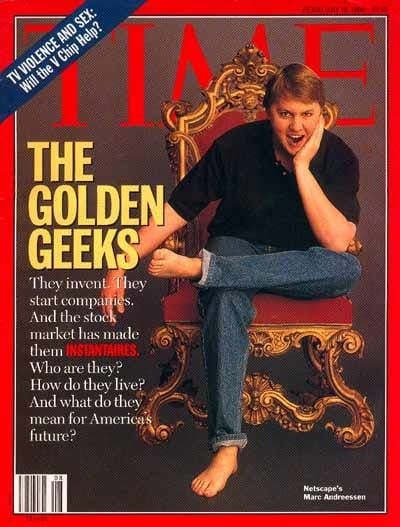
And, they got IPO in 1995. At the same year with Netscape. Guess which one was bigger?
Pixar went public on November 29, 1995, just one week after the successful release of Toy Story, in a landmark IPO that turned Steve Jobs into a billionaire.3
On August 9, 1995, Netscape made an extremely successful IPO, only sixteen months after the company was formed. The stock was set to be offered at US$14 per share, but a last-minute decision doubled the initial offering to US$28 per share.4
…
And eventually, they were acquired by Disney in 2006.5
And, I checked their portfolio yesterday. I realized most of the good animated movies I watched were made by Pixar. As well as series like Toy Story, Cars, Finding Nemo and The Incredibles, I am also big fan of one film stories like Soul, Ratatouille, Inside Out, Wall-e, Up. Probably every movie they made is worth watching. Normally, I didn’t realize all of the good animation movies were made by them. And I am not big fan of animation movies. I mostly watched them with my son, by googling and searching for a good story with a good message. So, that is exact point where I learned something while writing :)
By the way, I also watched most of their short films. You can find them at Disney plus, or I found a youtube video for you:
So, let’s get back to the 1996 interview.
What Pixar did that’s so extraordinary?
When Charlie Rose asked John Lasseter this exact question, he gave what I think is a perfect answer. I will just include his direct words here, because I could not summarize it better:
what Pixar does that’s so extraordinary is that we have taken a look at this new technology, computer animation, and we don’t look at it as a way to replace any of the creativity or any of the real art of film making. We still-- we look at it as-- these are just a great, new, expensive pencils, you know? That’s what this is. It’s artists using these computers as though, you know, an artist as Disney uses a piece of paper and a pencil and-- because the focus of what we do is still where it’s the most important and that’s with the story and the characters. And I think Toy Story is a success not because it’s computer-generated. It’s a success because it has, you know, the characters of Buzz Lightyear and Woody and the storyline that really has captivated audiences.
So, they are talking about a technological revolution at storytelling. Instead of drawing every frame by pen or at most computer graphics, they are using animation technologies to render the movie. Expensive pencils. I love that framing. It does not matter how fancy your tools are, the story still has to work.
And yes, Toy Story is the first movie shot as a digital animation. Film held up because the characters were real, not because the textures were.
Pixar Studios: A much smaller studio doing big things
The difference between Toy Story and Lion King or Pocohontas the difference is that we used a lot less people. we were a much smaller studio.
The difference between Toy Story and films like The Lion King or Pocahontas was not just visual style. It was headcount.
Disney was making frame-by-frame hand-drawn animation with hundreds of artists. Pixar was doing something comparable in scope with a much leaner team.
It is actually the economic argument that justifies every new technology wave in creative industries. Each revolution finds a way to do more with less.
Computer animation gave Pixar leverage. Not enough to replace Disney overnight, but enough to become the second studio in history (after Disney) to produce an animated blockbuster with over $100 million in domestic box office. The first time since Snow White in 1937. Sixty years of nothing, then Pixar.
By the way, it took 10 years for Pixar studios to come up with their first movie. But they got oscar with their short movie in 1989!
A Word About John Lasseter
I want to give John a separate paragraph here, because I think he is the slightly underrated half of this story. (Steve Jobs had a knack for making every room about Steve Jobs. Very understandable. Very Steve.)
John Lasseter trained as a traditional animator at CalArts, worked at Disney, got fired from Disney because he was too enthusiastic about computer animation, and ended up at Lucasfilm where he found his people. His first encounter with 3D animation was around 1981, and by his own description it was the dimensionality that blew his mind. In hand-drawn animation, you are always working flat. You draw the side of a face, you draw another angle, you cut between them. In 3D, you build the world once and then fly a camera through it. For someone who grew up drawing, that is a completely different kind of magic.
When Charlie Rose asked why someone should come to work at Pixar, Lasseter gave three reasons: creative satisfaction, ownership over your small piece of the work, and fun. He said it simply: “At Pixar we have a lot of fun. And I think it shows in the film.”
(Also: John later became Chief Creative Officer at both Pixar and Disney Animation after Disney acquired Pixar in 2006 for $7.4 billion. Steve Jobs became Disney's largest individual shareholder. Not bad for $5 million and a bet on expensive pencils.)
Now Let’s Fast Forward to 2026
We are now watching the same movie again, except the pencils are called AI.
The parallel is almost uncomfortable in how clean it is.
In 1995, Pixar was a small team using new technology to produce something that previously required hundreds of people and decades of craft. The result was not perfect (go rewatch some of those textures), but it was good enough, and the story carried it.
Today, AI video generation tools are doing the same thing to live action and animation. Not perfectly. Not yet. But the trajectory is obvious and the clock is ticking.
Studios like Runway, Sora (OpenAI), Kling, and others are producing short-form AI video that would have looked science fiction three years ago. Right now, most of this is reels, experiments, promotional material. Nobody has made an AI feature film yet. But then again, Pixar won an Oscar with a short film in 1989, six years before Toy Story. The progression looks familiar.
The new framing question, and I think it is the same question Lasseter was answering in 1996, is: are we using this as a replacement for creativity, or as a new kind of pencil?
Because AI can absolutely be used to skip storytelling entirely. You can prompt your way to visually impressive nonsense in about 45 seconds. I have tried. It is fast and hollow.
But it can also be used the way Pixar used computers: as a tool that gives small teams the leverage to punch above their weight. A two-person studio with a good story and AI tools might be able to produce something that previously required a full animation house. That is not a threat to filmmaking. That is the same bet Lasseter and Jobs were making in 1986.
And, I personally also feel exciting about this. I’ve always had the stories, like all the other creative people, but I never had the studio. Now, I don’t need to wait until I’m 'rich' to be a filmmaker. I just need to be a better writer.
The “Expensive Pencils” Test
I keep coming back to that phrase. Expensive pencils.
It is a useful test. When you reach for an AI tool, are you using it to tell a better story, or are you using it to avoid telling a story at all? That question is applicable to blogging or programming as well.
Pixar’s whole thesis was that the technology should be invisible. Audiences should feel the characters, not count the polygons. And honestly, that was correct. Nobody watching Toy Story was thinking about render farms. They were thinking about whether Woody was going to make it back to Andy.
That is the bar. Whatever AI brings to filmmaking, the story still has to work. The characters still have to feel real. The audience still has to care.
If we remember that, we are using expensive pencils. Once we lose the story, we aren’t creating magic. We’re just generating high-resolution noise.
One More Thing Steve Said
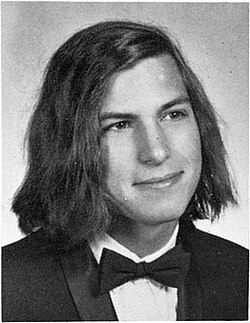
Near the end of the interview, Jobs said something I found quietly interesting. Charlie Rose asked whether he might move on to something else, the way Jobs had moved through companies before. And Jobs said:
“I tend to stay where I start until somebody kicks me out.”
He said this while running a company that was not Apple. While Apple, the company he cofounded, was struggling and heading toward near-bankruptcy. While Microsoft was winning the PC wars and Netscape was fighting for the web.
He watched all of that, he said, “as a spectator sport.”
…
And then two years later, Apple begged him to come back…
By the way, I read a lot about history of technology, especially focused on Apple and Sony. I am not a fanboy of Apple, while I was a fanboy of Sony. And we are celebaring the 50th anniversary of Apple these days.